Since September is here, it’s time that I write about the quickly-approaching fall feasts! I covered the basics of the spring feasts in a previous post, and now it is time to address the remaining three moedim, or “appointed times,” of YHWH.
It is widely understood that the Messiah fulfilled the spring feasts during his first coming, and it is believed that he will fulfill the remaining feasts when he returns a second time as our Conquering King!
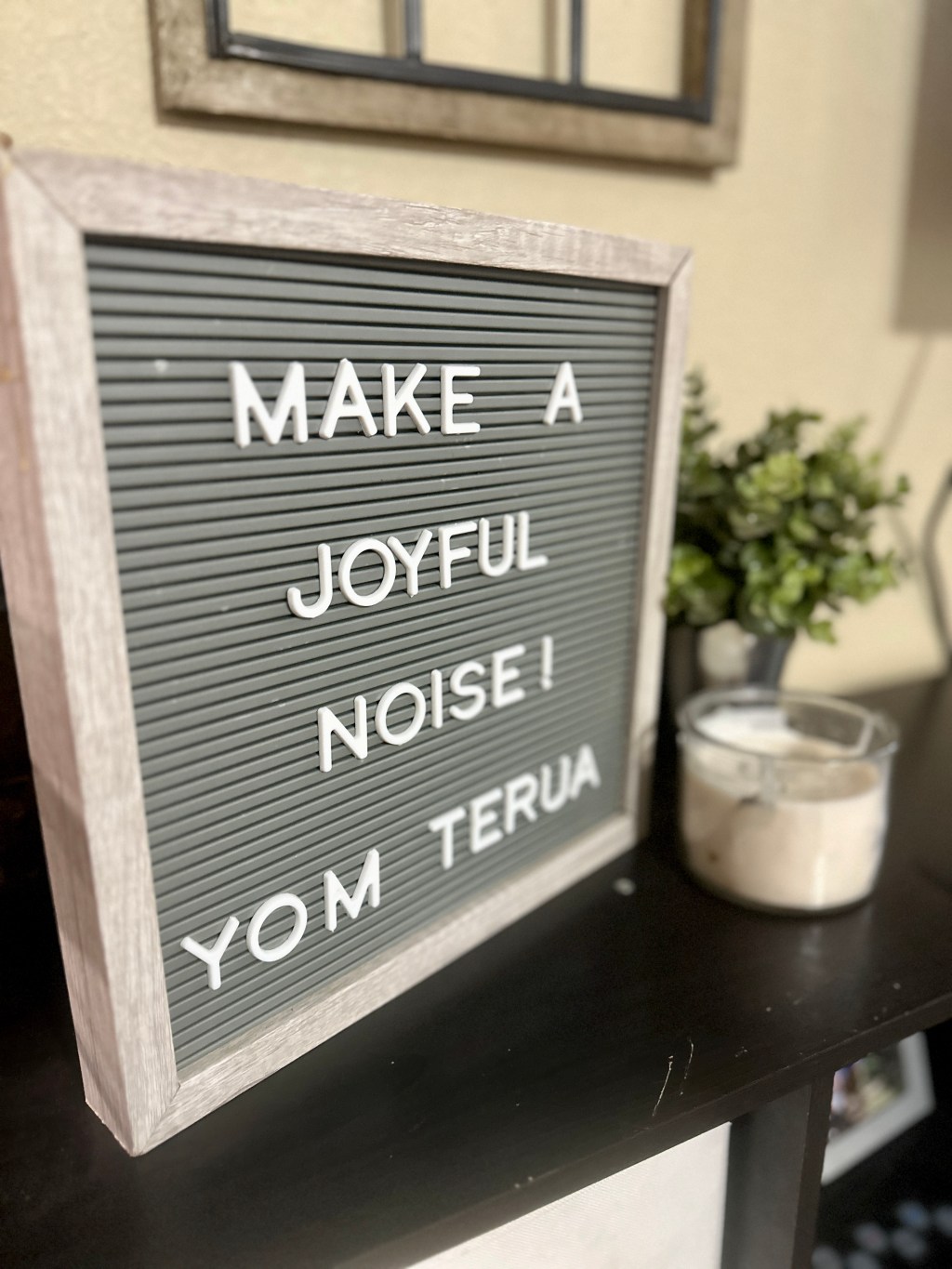
The first of the fall feasts is the Feast of Trumpets, or Yom Teruah. We tend to equate the word “teruah” with trumpets, but it could also be interpreted as loud shouts or loud noises. The Feast of Trumpets is often associated with the Old Testament account of Joshua and the battle of Jericho (Joshua 6: 2-16), because of the shouts and the trumpets that preceded their victory over that great, walled city. The Feast of Trumpets is also equated with the phrase “no one knows the day nor the hour.” While most feast days have an actual date associated with them (like the 14th day of Abib for Passover), this day has to be marked by the sighting of the first visible crescent of the new moon IN Jerusalem by at least TWO witnesses. Therefore, no one would know the day, nor the hour. Partly because of this and partly because of the vast number of scriptures referring to the sound of a trumpet blast at Jesus’ return, many believe that Jesus will one day return on the clouds on this very feast day. So the second coming of Yeshua is thought to be the fulfilment of this Holy Day.
Ten days after the Feast of Trumpets, we find ourselves arriving at the Day of Atonement(s), or Yom Kippur(im). This is known as the MOST holy day of the year to YHWH’s chosen people and no work is to be done on this set-apart day. It is a High Sabbath. This is the ONE day a year that the High Priest would enter into the Holy of Holies to make atonement for the people. The Biblical book of Hebrews makes it very clear that Jesus is now our high priest (in the order of Melchizidek) and that whereas the human high priest would enter into that most holy place with the blood of calves and bulls, HE has entered into the Holy of Holies by his own righteous, sinless blood, poured out for us (Hebrews 9 and 10). While the blood sacrifice required in the Old Testament offered a temporary covering for sin, it could not cleanse our hearts or consciences. Jesus, by the sacrifice of his own blood, the blood of the perfect, spotless Lamb of God, covers all of that and more. The rending of the veil that separated the inner court from the Holy of Holies symbolizes our direct access to the throneroom of God through Jesus our High Priest, who is always interceding for us. Yom Kippur tends to be associated with the story of Jonah in the Bible. The ten days leading up to the Day of Atonement are referred to as the Days of Awe, and are intended to be a period of intense self-reflection, repentance and atonement. On the actual day of Yom Kippur, many fast, as the command in Leviticus tells us to “afflict ourselves,” which was commonly associated with sackcloth and ashes and fasting. While there is no direct command to fast (and many people cannot for medical reasons), we do choose to do so on this day. As we fast, we pray for our nation, our leaders, our family and ourselves. We reflect on what we need to turn from and dwell on a deep appreciation that God has sent his Son to cover our sins and restore us to relationship with him. This Teshuvah, or repentance, is what this entire day is about. Then, we must confess and seek forgiveness from those we’ve wronged and from the Father, who is faithful and just to forgive our sins and cleanse us from all unrighteousness (1 John 1:9). In scripture we see that the number ten is significant and often represents a period of testing, intense tribulation, or preparation for judgment. This Holy day follows the Feast of Trumpets (Yom Teruah) which is known as the “opening of the books.” This refers to the books of life and death that are opened and then closed (with finality) on Judgment Day before the Great White Throne Judgment (Revelation 20:11-15). Yom Kippur is referred to as the “closing of the gates,” meaning that your judgment is sealed. Yeshua told us that he is the gate (John 10:9)- so enter while there is still time! Therefore, the future fulfillment of Yom Kippur is Judgment Day when the whole world will be judged and is also referred to as the Day of Wrath (and is also closely associated with the grape harvest).
And the final feast days left to be fulfilled are my favorite- Sukkot- or the Feast of Tabernacles! This final 7-day feast looks forward to the Millennial Reign with Yeshua, and to the Marriage Feast of the Lamb! These 7 days are full of joy, feasting and merriment. It is known as the season of joy. The first and last days are observed as Special Sabbaths. So how do we celebrate? Outside and in a sukkah! A sukkah is the Hebrew word for a “temporary dwelling.” It referred to the tents that the Israelites lived in as nomads and we are to commemorate and remember how the Israelites lived in temporary dwellings in the desert after leaving slavery in Egypt. We reflect on how the Lord directed, healed, protected, disciplined, preserved, provided for and fulfilled his promise to his people during this time. We also recognize that in our current state, our own bodies are merely “temporary dwellings” and look forward to the day when we will be made new, when the perishable puts on the imperishable (1 Corinthians 15:51-54). The other half of the command is to put palm fronds and other leafy plants on the roof of the Sukkah. It was actually in anticipation of Jesus coming in as King that “Palm Sunday” occurred. The people knew that the first feast day to be celebrated in the millennial kingdom would be Sukkot, and when Jesus entered Jerusalem on a colt, the foal of a donkey, they thought he was coming in to establish his kingdom and overthrow Rome. They were ready with their palm fronds to welcome in the King and usher in the kingdom! Little did they understand that what He was coming to do was much bigger than that. He first had to come as a suffering servant, and soon will come back as the Conquering King! The future fulfillment of this one is also the Marriage Supper of the Lamb! We see a LOT of the marriage symbolism in the feast days! Passover and the shedding of Yeshua’s blood was him paying the bride price. During Unleavened Bread, we get rid of the leaven and purify ourselves as his betrothed. During Firstfruits, Yeshua presented the terms of the marriage contract or covenant to the Father and they were accepted. We are currently waiting for our groom to come back for his bride, the church, which will happen at Feast of Trumpets, where Messiah will bring us to the place he has prepared for us (John 14:3-10). Then finally, at this culminating feast of Sukkot, we will be able to celebrate the marriage supper of the Lamb! What a joy that will be! There is so much more that I could write about these feasts, but this is just a brief overview. Every year as we celebrate, I learn something new and new depths are revealed. I hope this helps you to understand the fall feasts better and that you will accept the invitation to meet with YHWH during his moedim or appointed times!


 Logsdon's big adventures!
Leave a comment