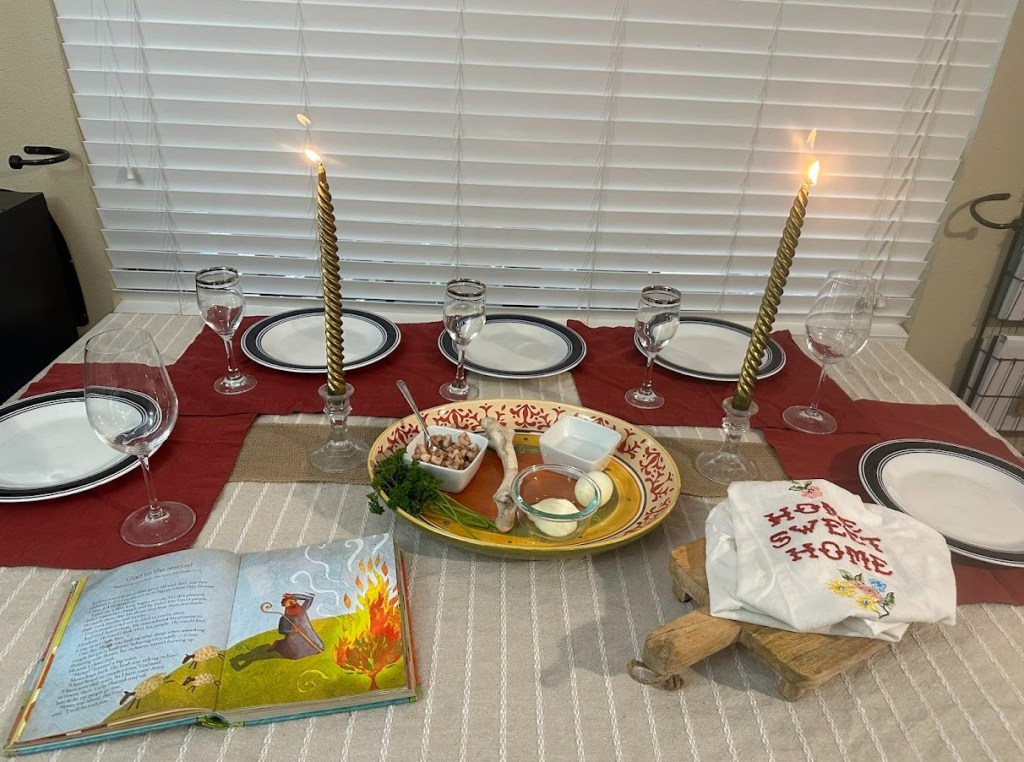
We’ve been celebrating Passover for several years now, and each year I find that our celebration changes and adjusts as our understanding of what this feast signifies deepens and as our children get a little bit older. We spent our first year officially hosting Passover with some dear friends in our home, and the following year we were able to celebrate with the same friends in their home. This past year we celebrated with just our family and what a sweet celebration/commemoration it was!
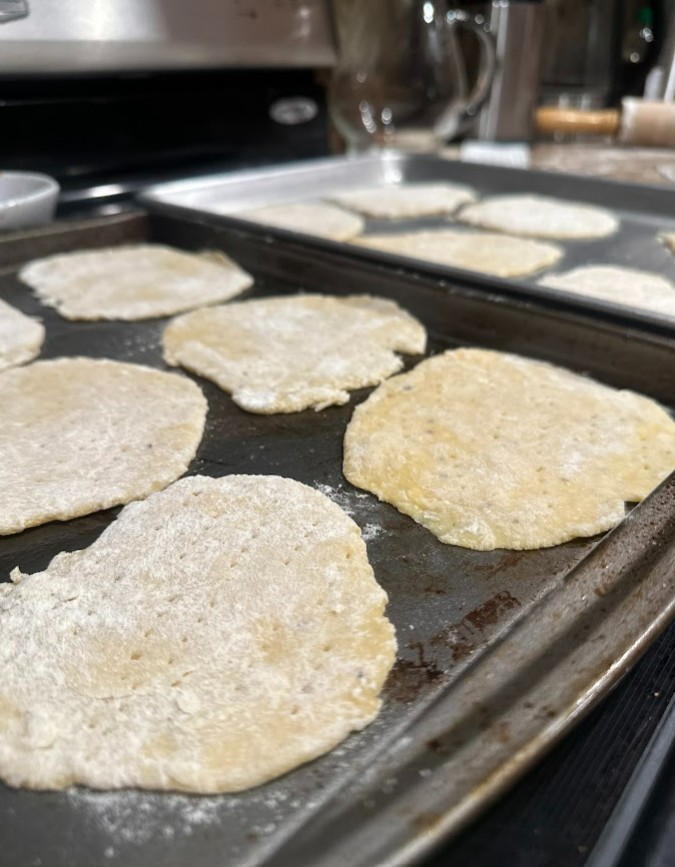
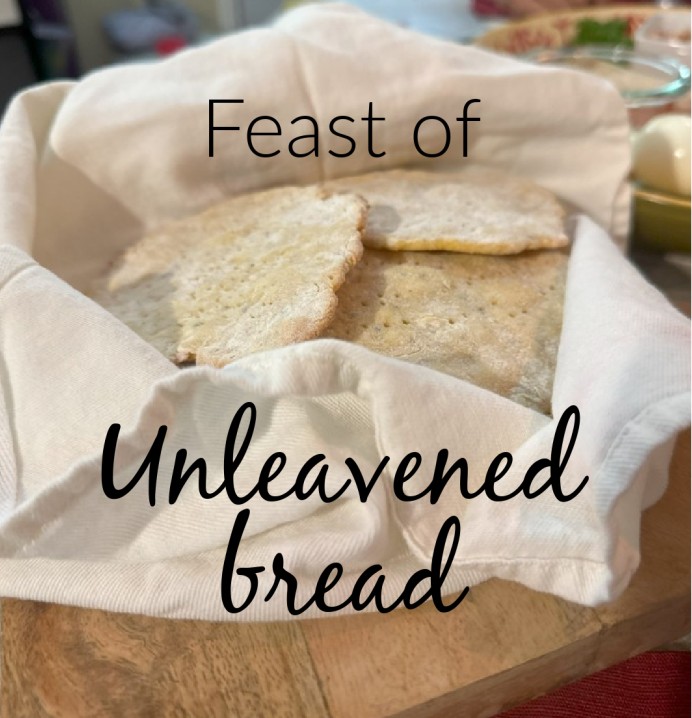
Passover requires a bit of preparation- not only in the meal, but since we make (rather than purchase) our matzah, we also had to bake our unleavened bread for the early part of the week. Since it’s a messy process, I typically have the kids only help me with the mixing of the ingredients and then I roll them out and place them on the baking sheets (this part is messy and sticky!). Then the kids help me with the “pricking” of the matzah with a fork. This represents the wounds Messiah bore in his body and the ways it was broken for us (Isaiah 53:4-6).
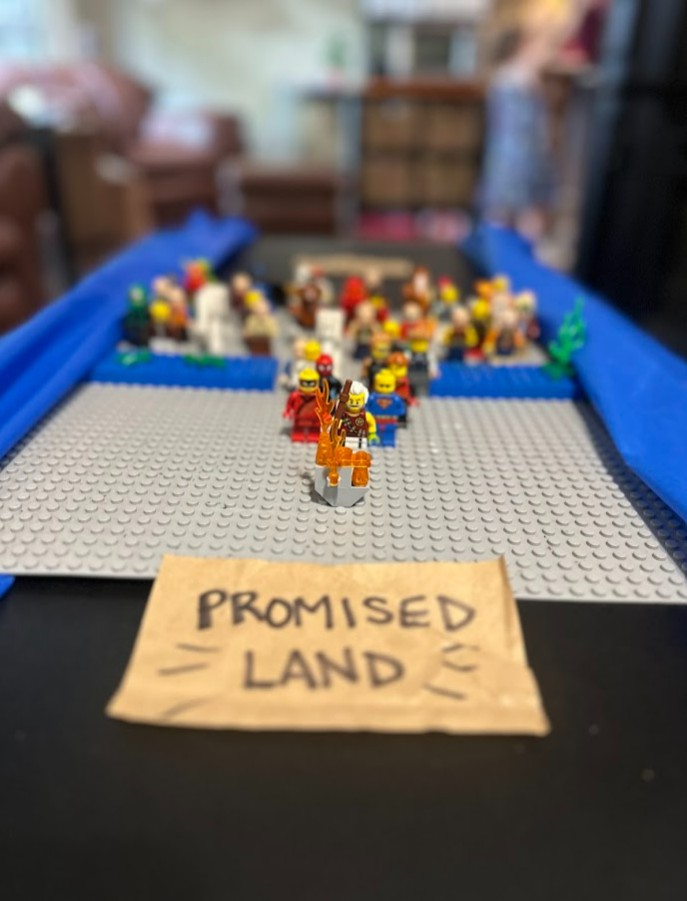
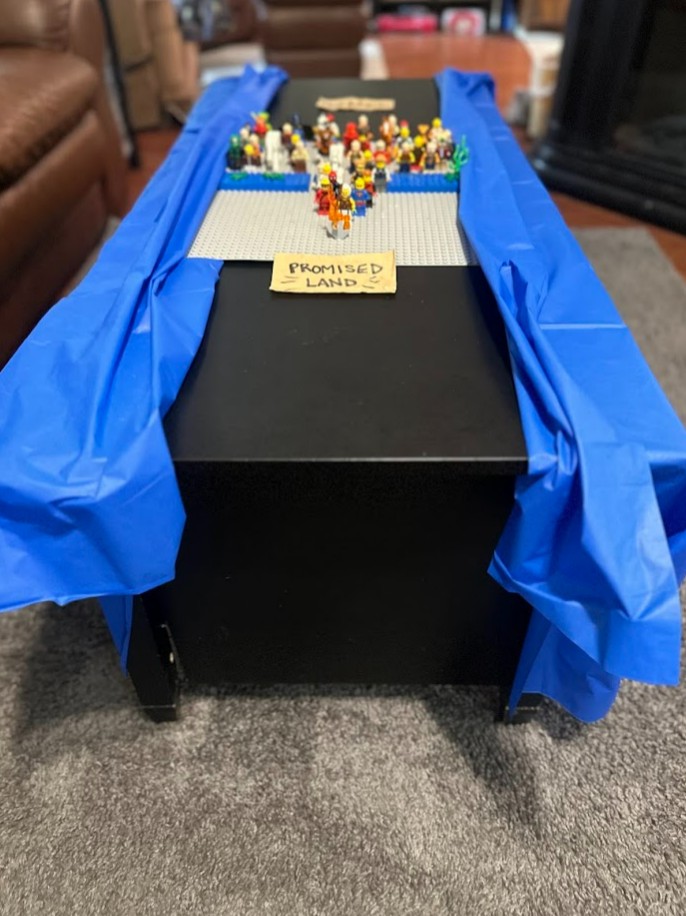
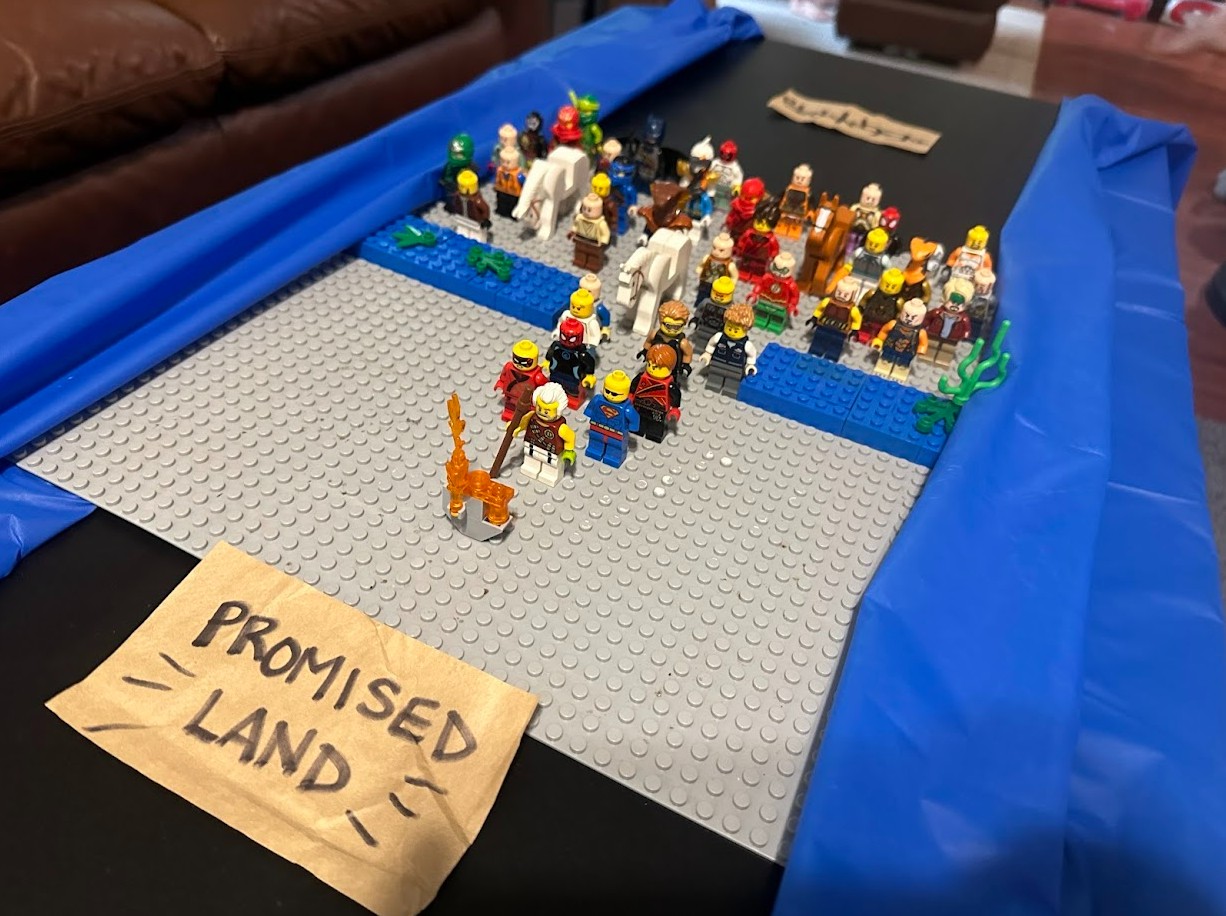
As part of the build-up to the evening, I tasked my oldest son with depicting Moses leading the people out of Egypt using LEGOs. He rose the the occasion and it became our coffee table centerpiece and quite the talking point. He paid such sweet attention to detail and even made the fire that went before them. I used a disposable blue tablecloth on both sides of his creation to represent the parting of the Red Sea.

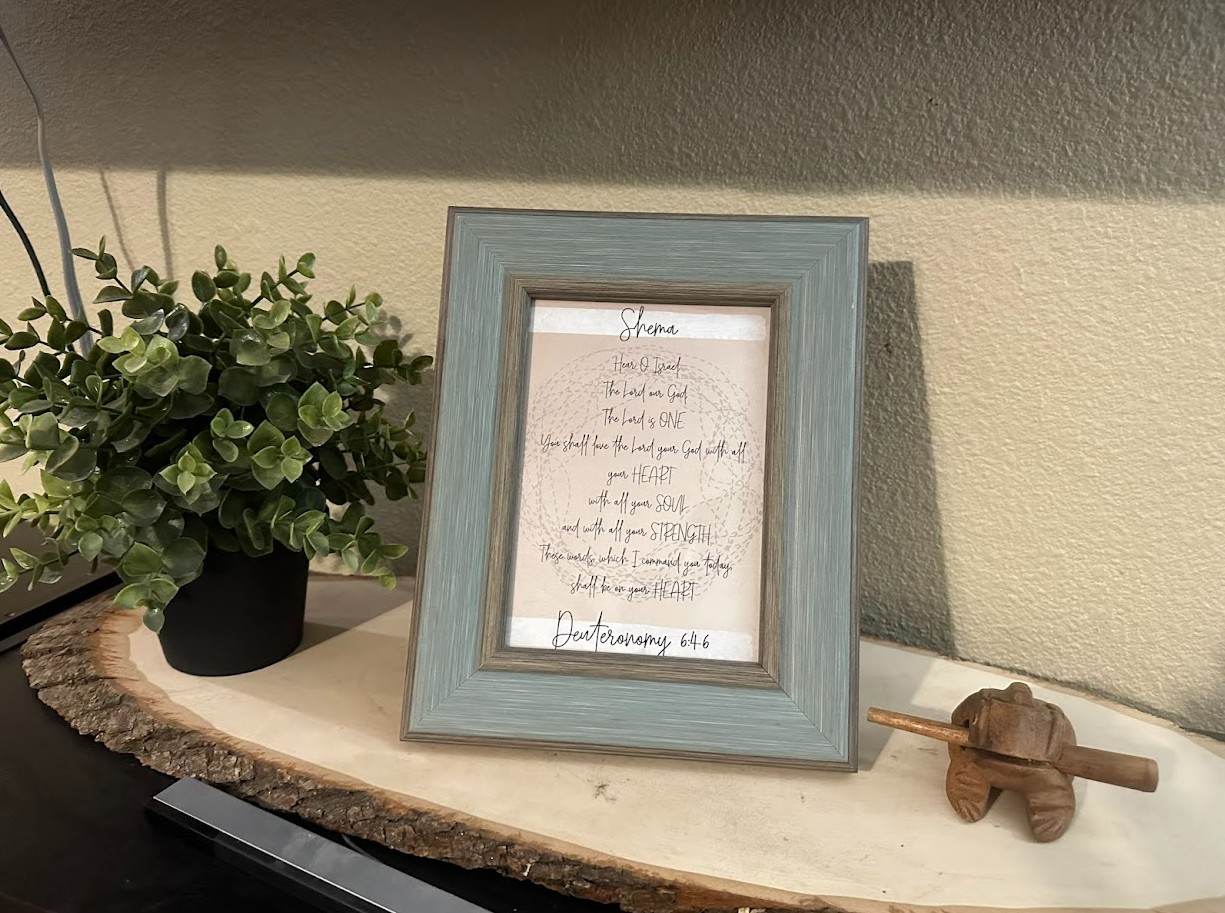
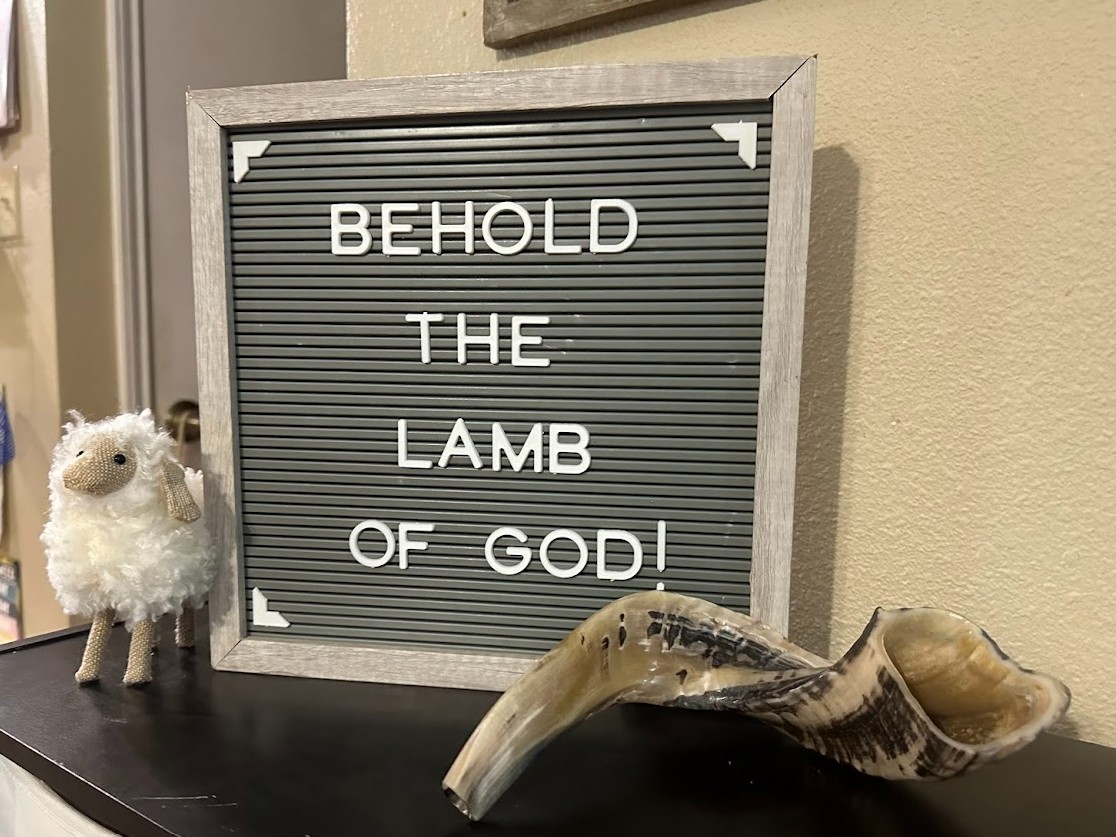
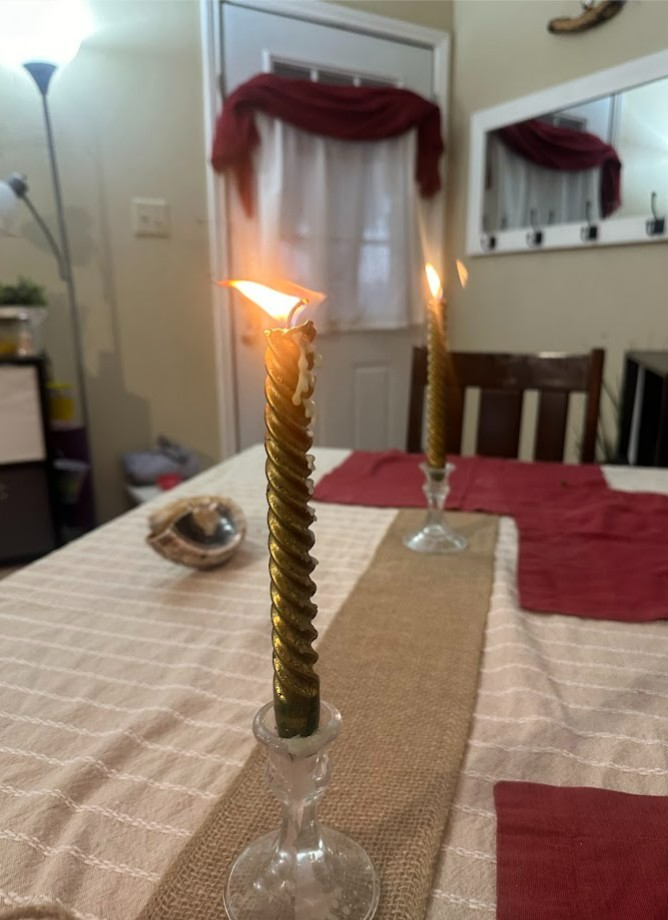
Passover decorations– our house is small, so we have to keep things simple. We set out a special lamb that stayed out until firstfruits, our shofar, which we get to blow on these special, set-apart days, some special candles and a tablecloth for the table, fancy glasses for the kids’ juice, the Seder plate, and we drape a red scarf over our doorposts to represent the blood of the lamb and our covering for sin.
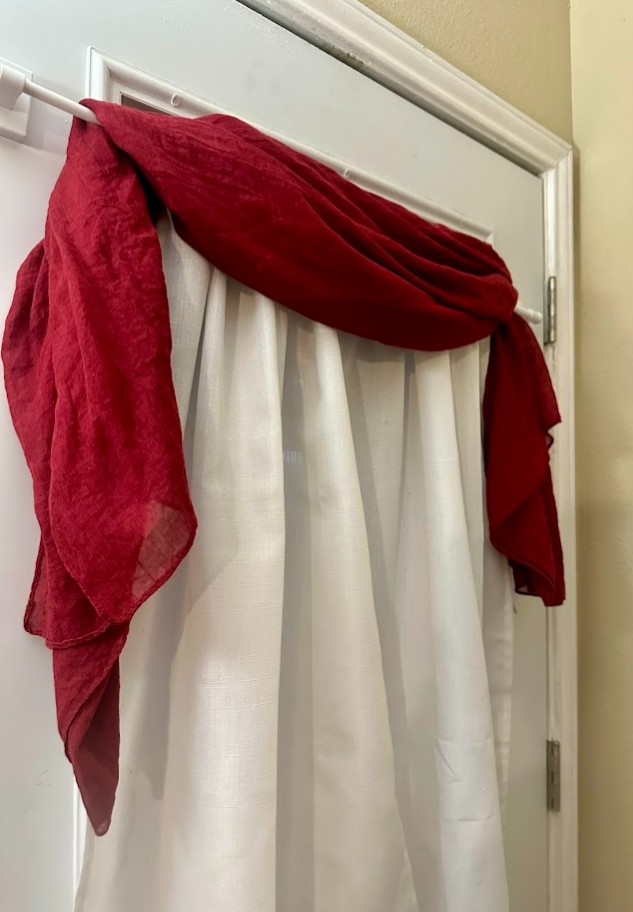

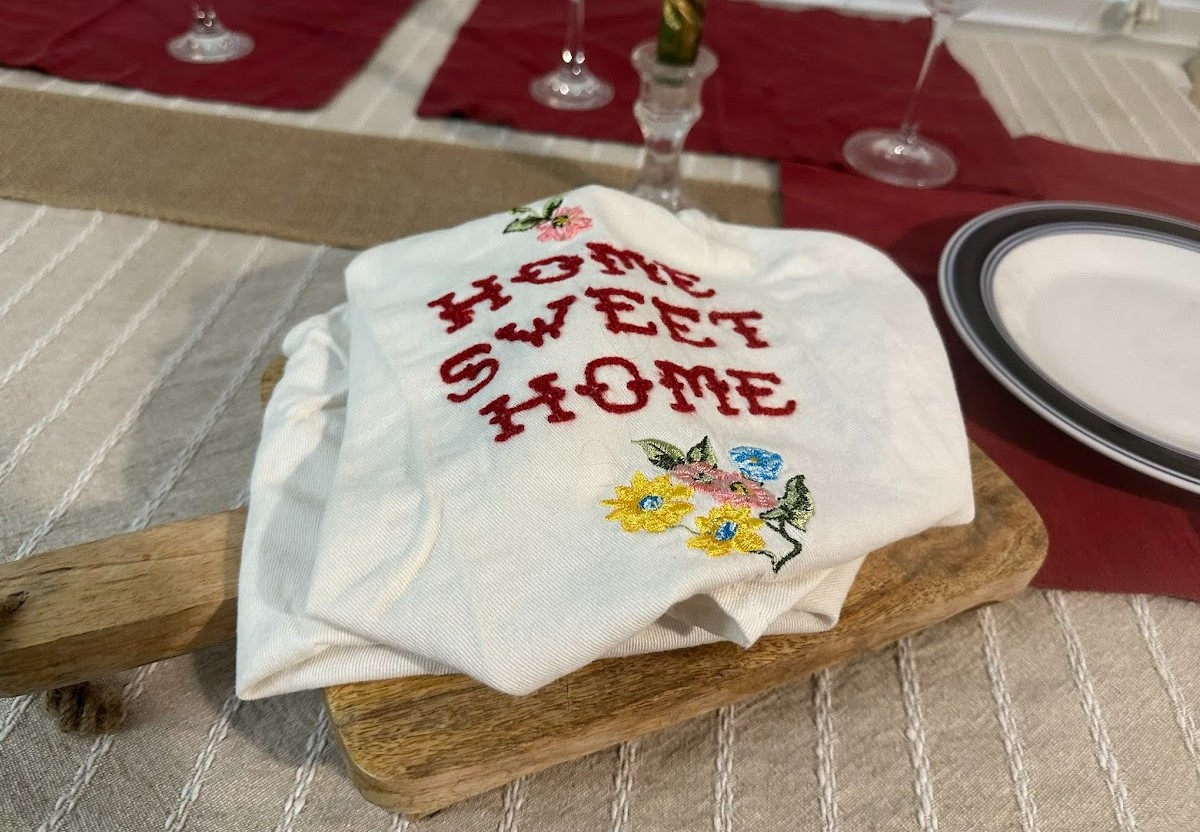
At the beginning of our evening, I asked the kids what they remembered about Passover (since this is now their third year celebrating it). They remembered it was about Moses and Egypt and about the blood on the doorposts. I hope that each year their understanding grows, as my own has!
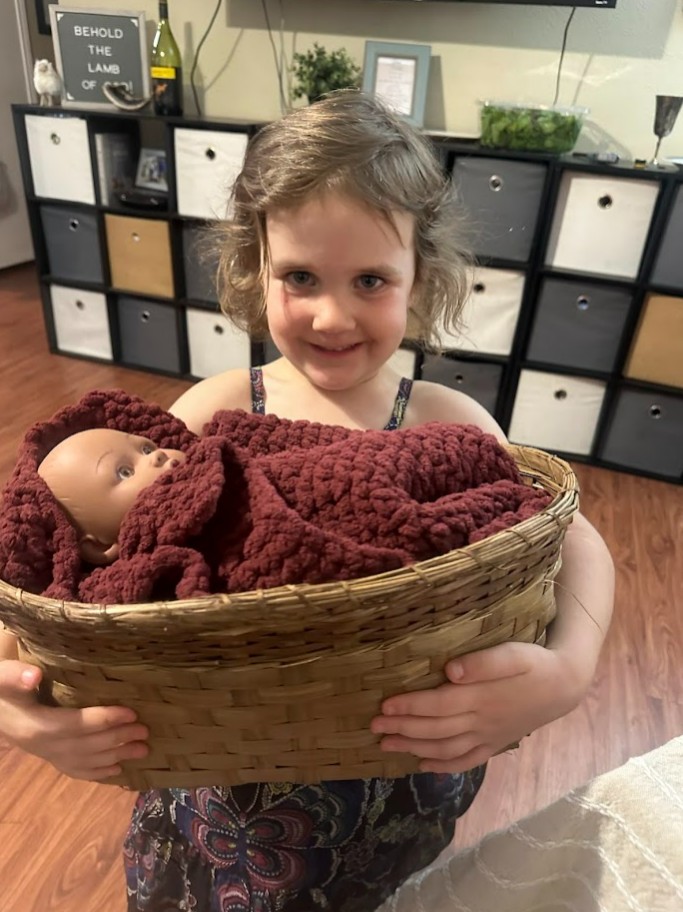
One of our opening activities was to find “baby Moses” hidden away in our house. The only clue that I gave them was that he was hidden “among the reeds.” My daughter ended up finding him and I connected that to Pharaoh’s daughter finding Moses in the actual Biblical account. She loves babies and was quick to care for our sweet “baby Moses.”

And then we began! I’m still back and forth about the actual Seder meal/Seder plate. We don’t know for sure that the Seder is scriptural or if it’s merely a tradition of man (not all man-made traditions are bad, we just want to use caution when deciding whether we live or die by them) so we loosely follow the seder meal outline and do have the seder plate as a talking point of our evening.
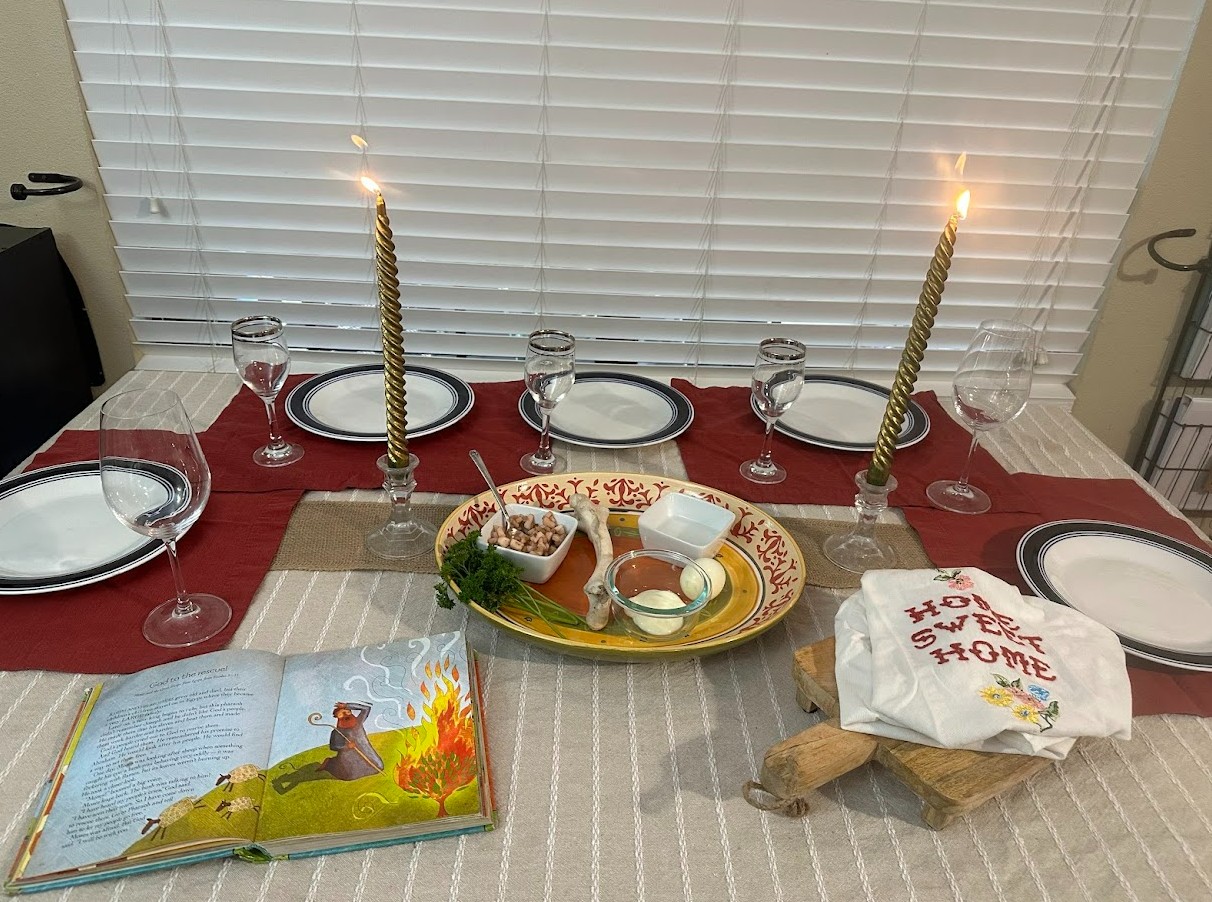
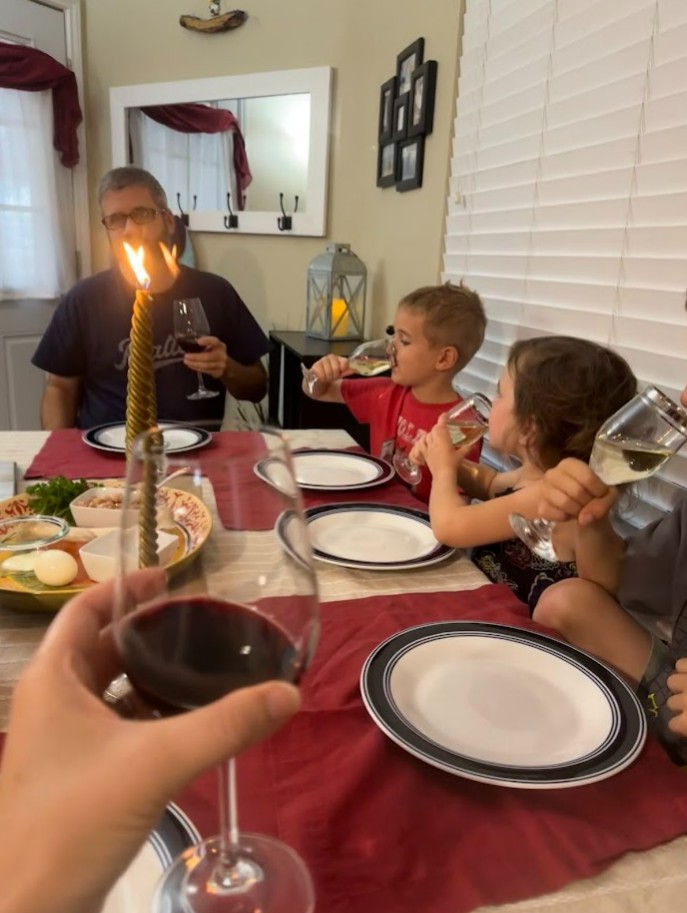
For the first few years we used a haggadah (meaning “telling”- essentially a Passover script) in video form that was kind of a fun way for the kiddos to follow along. We watched as a woman gave us the Hebrew words for each part of the seder meal and we followed along that way. She was fun and engaging, but this year I used the same basic outline but there were some parts we did quickly and others where we lingered longer. Here is the Seder meal order we followed along with some photos of our dinner.
Step 1: Kadeish– meaning “holy, sacred, set-apart.” During this first step we bless the meal, praise God that this evening has been set apart as holy and sacred and pour our first glass of wine/juice.
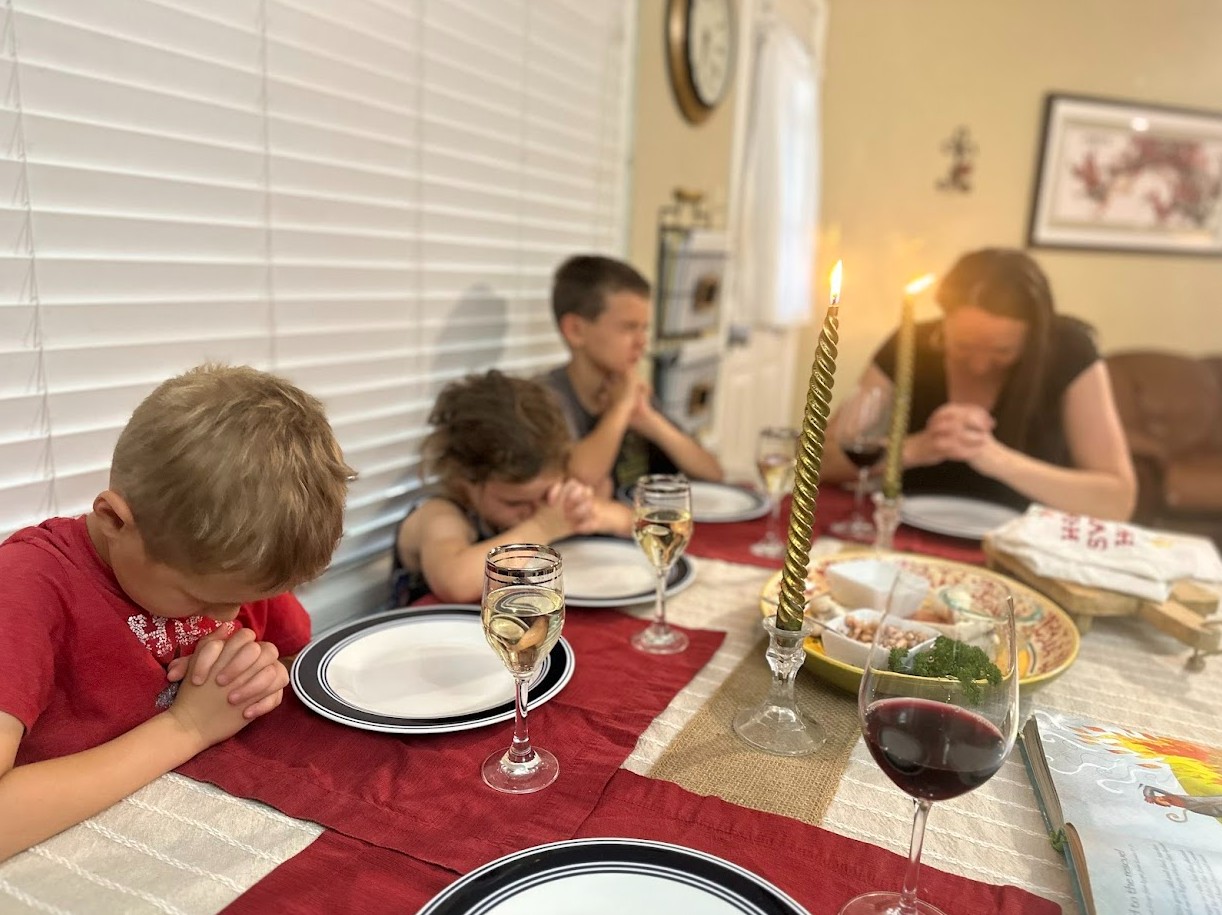
Step 2: Urchatz– the first washing- using simply a cloth or wipe to clean our hands
Step 3: Karpas– green veggies (usually celery or parsley) representing new growth. These are dipped into the salt water to remind us of the tears shed by the Israelites while in Egyptian captivity. (Sad faces while eating this one). God always uses our pain for our good and his glory! It is never wasted!
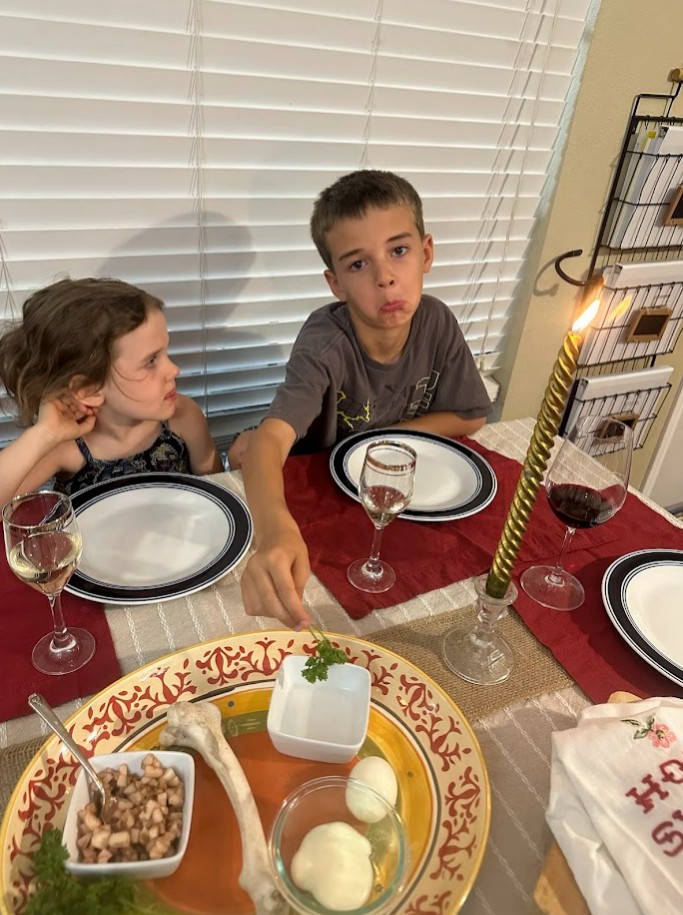
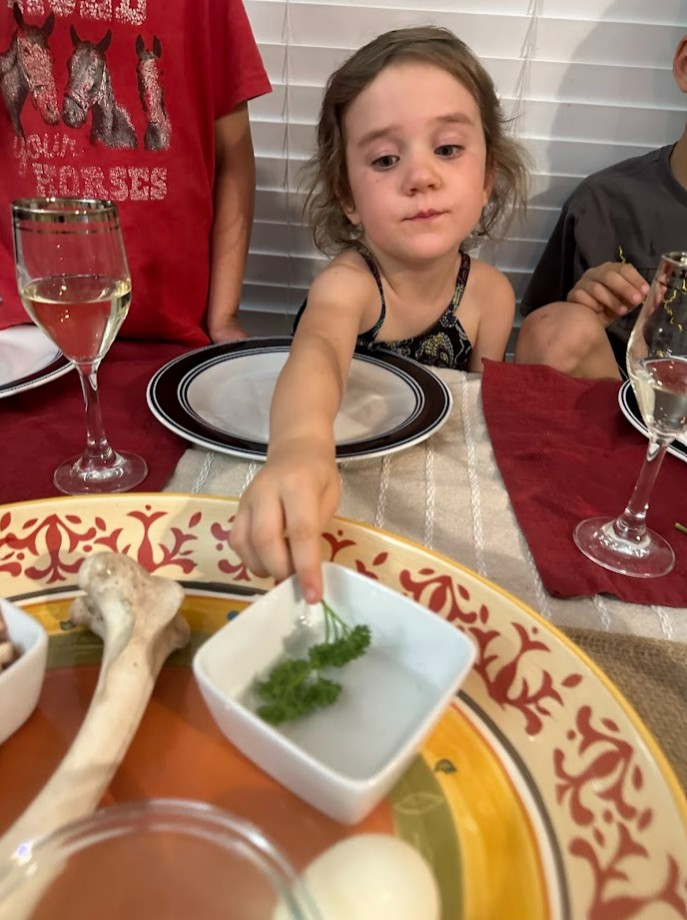
Step 4: Yachatz– this is supposed to be a plate with three matzah on it. The middle one is then broken in half. I actually let each of my children break their matzah with a karate chop as they yell “yachatz!” It’s just a fun way to try to remember that Hebrew word, meaning “to divide”. For us, this represents the broken body of Yeshua. They each break their own because he died for OUR sins. There is recognition here that he took the punishment for each of us- we were the reason that his body was broken. Then the smaller half is supposed to be kept in the stack as a reminder of those less fortunate. This is also the time you are supposed to hide the “afikomen” (the larger unbroken piece placed in a cloth or bag), which comes into play later.
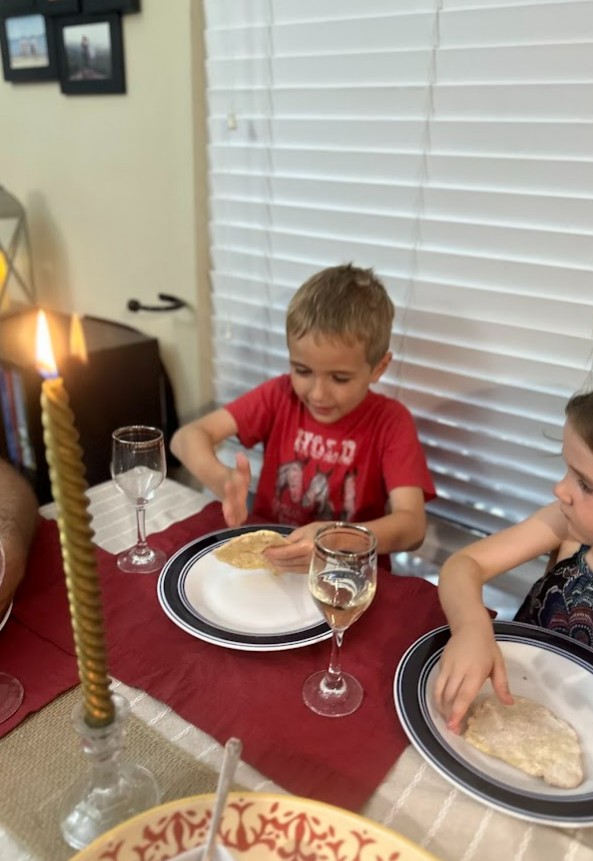
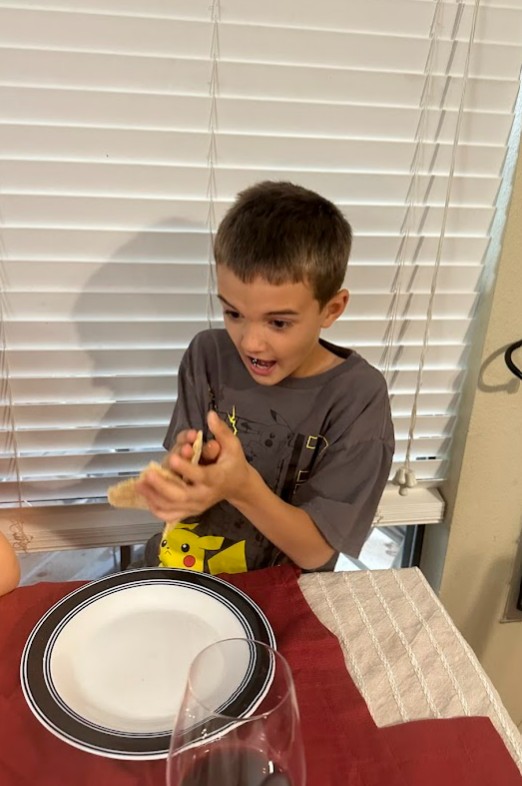
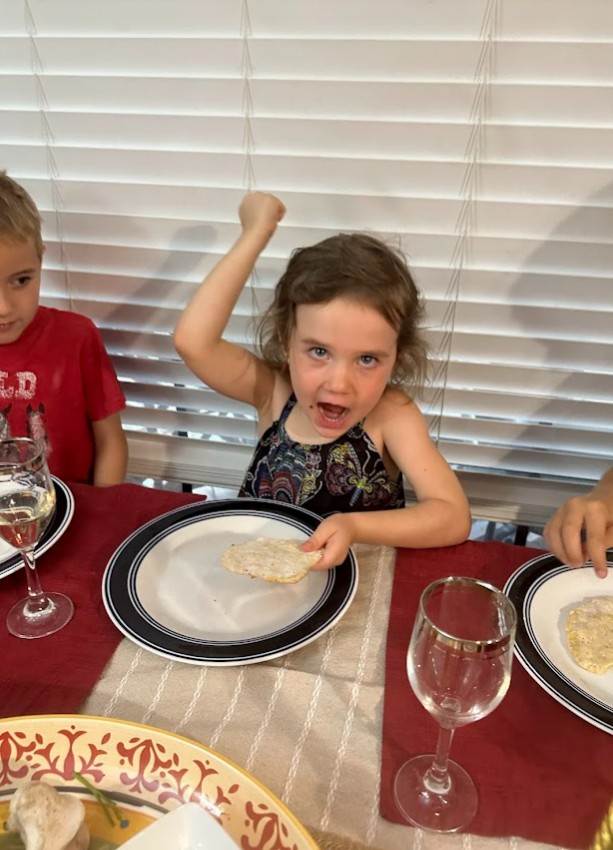
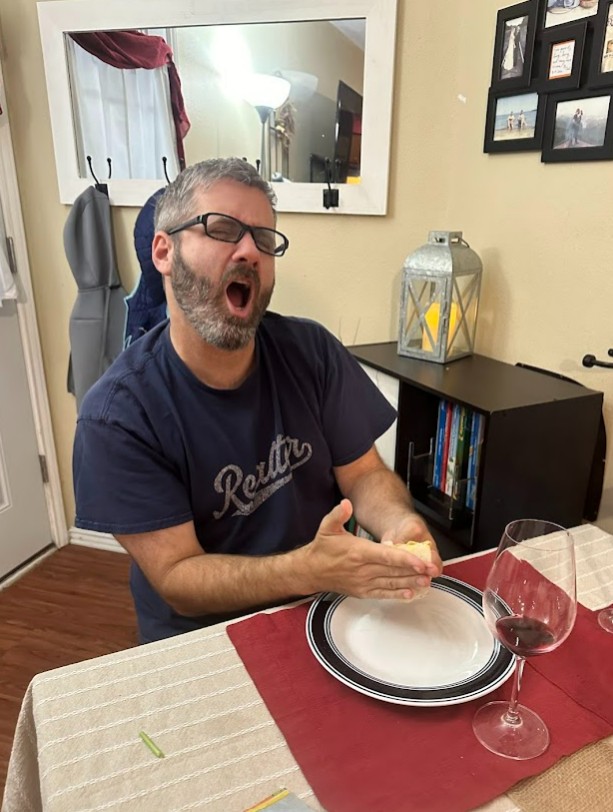
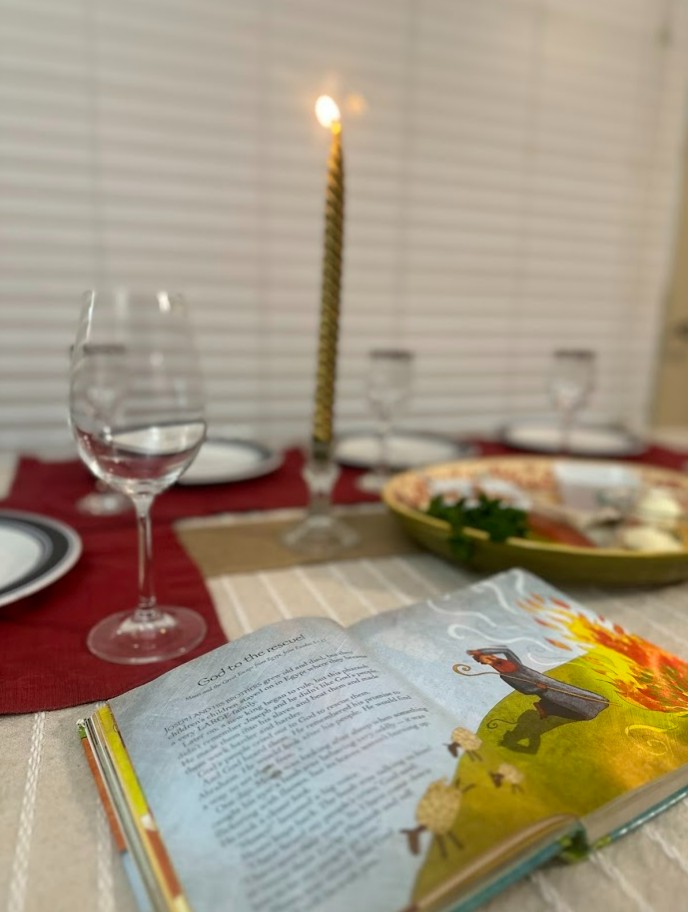
Step 5: Magid– the telling of the story. This is when we read the story of the Exodus to the kids. This is also the time to pour the second glass of wine/juice. Since our children are still young, we read the Exodus story out of the Children’s Storybook Bible, which I love because it takes all the Old Testament stories and shows how they point to Yeshua! It is also short enough to keep their attention, while still recounting the most important parts of the story.
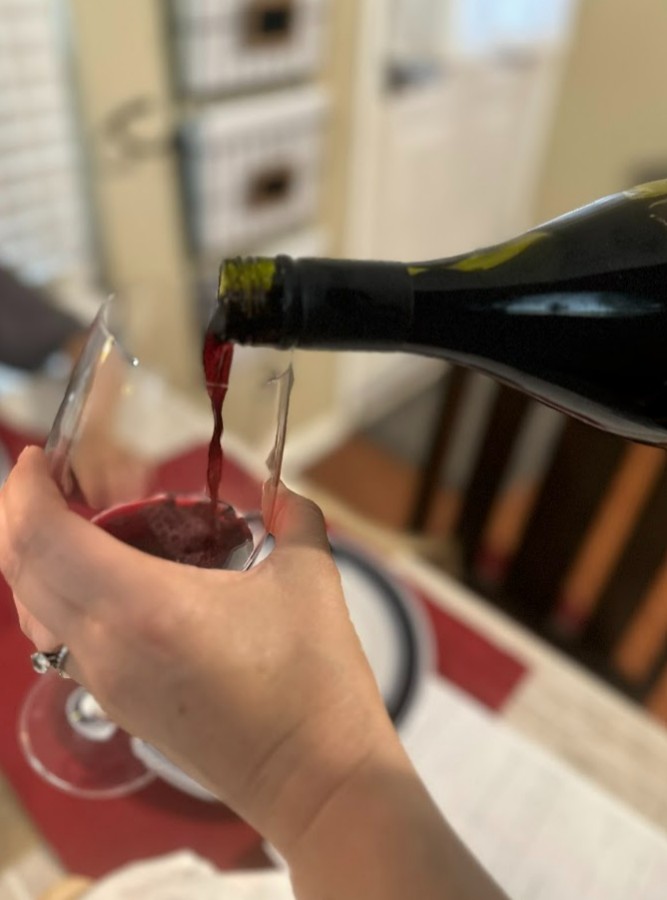
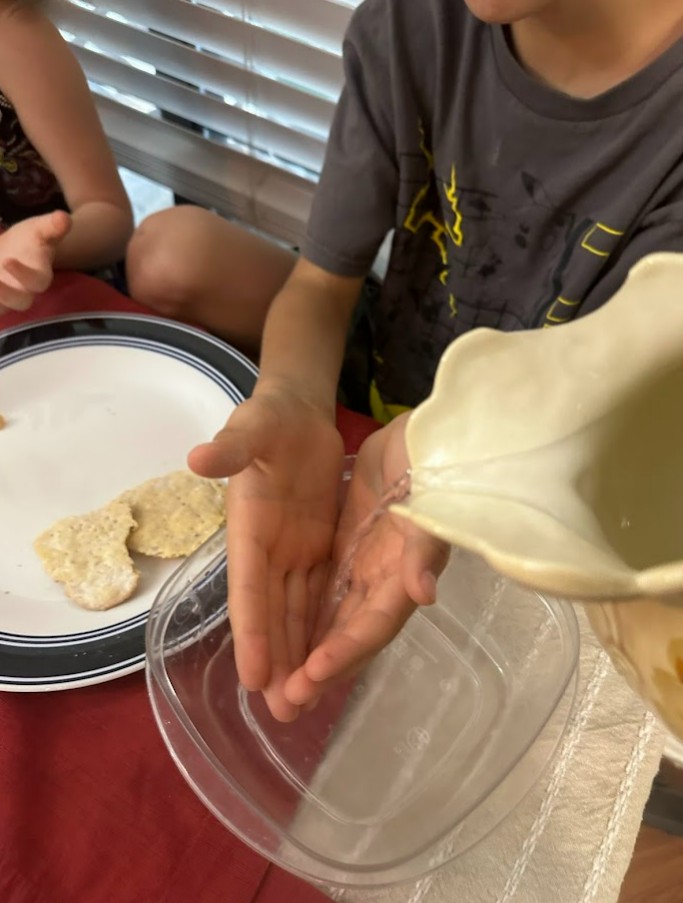
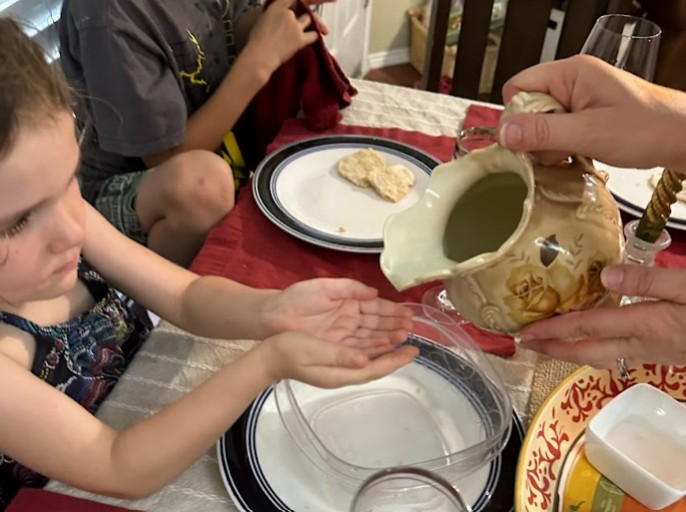
Step 6: Rachtza– the second hand washing with a pitcher and water. There are supposed to be three pours over each person’s hand. To us this represents the Father, Son and Holy Spirit and we are reminded that Jesus promised living water to all those who would believe in Him (John 7:38). It also shows how Jesus’ blood has fully cleansed us- to do or say things three times in Hebrew culture meant that it was done to its fullest. So we have been fully, completely cleansed of our sin. Just as Jesus told Peter as he washed his feet in the upper room, “Unless I wash you, you have no part in me.” Peter responded zealously, “Then Lord, not just my feet but my hands and head as well.” Jesus told him that he now only needs to “wash his feet” because his whole body is clean, meaning that, although we have been fully cleansed and made new, we still need to continue to self-evaluate, come to the Father, repent and get right with him as we come across sin in our own lives.
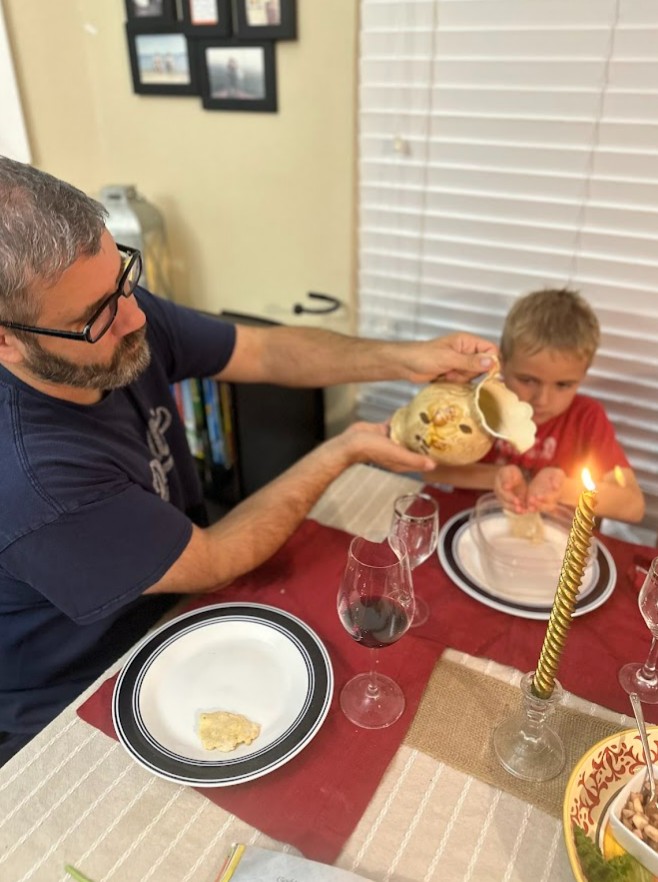
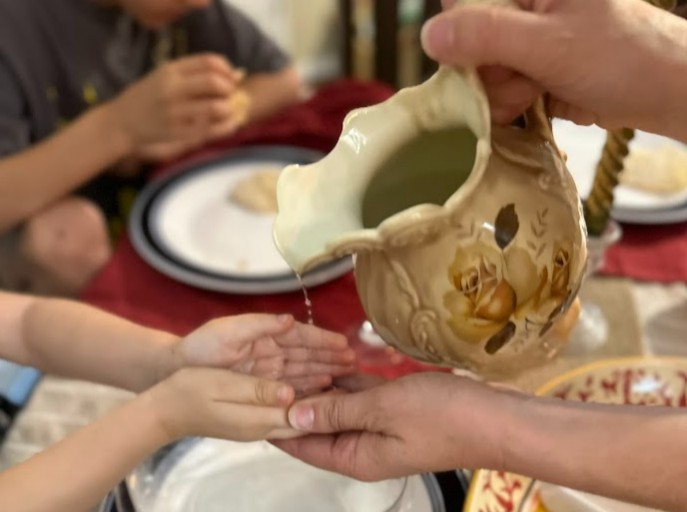
Step 7: Motzi– this is the blessing before the eating of the bread. It recognizes that God alone provides what we need and we thank him for the Matzah that we will partake in eating. We also bless the meal and this serves as the official “call to dinner.”
Step 8: Matza– eat the matzah! This is the moment my kids wait for! They love the unleavened bread that we make (rather than buy) and look forward to eating it every year! We recognize that we do not live on bread alone but on every Word that comes from the mouth of God (Matthew 4:4). And we praise God that we have Jesus- the very bread of life! (John 6:35)
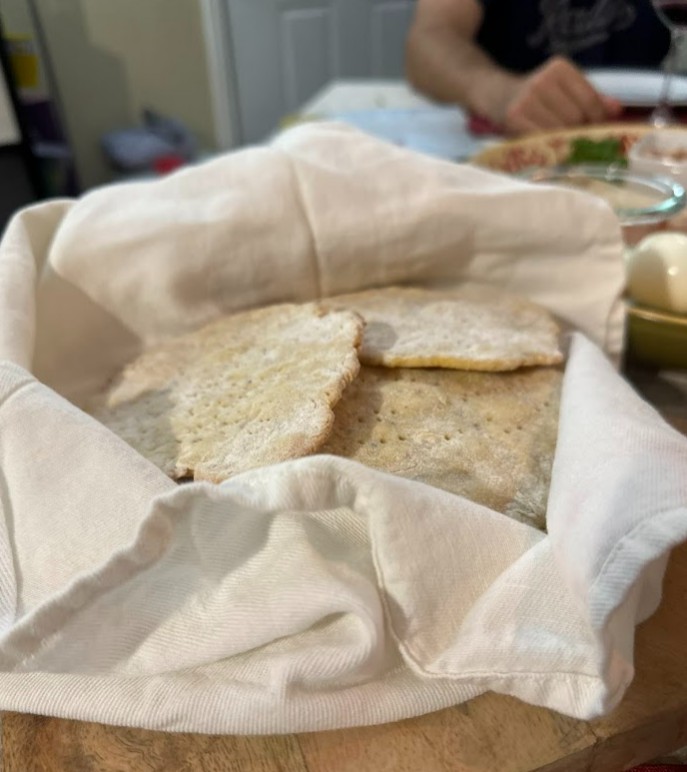
Step 9- Maror– meaning bitter. This is when we eat the matzah with the bitter herbs (for us this is horseradish). This reminds us of how bitter slavery is and how grateful we are to have been set free from our bondage to sin and death!
Step 10- Koreich– means sandwich. Yep, here we make a “sandwich” of our matzah with the maror (bitter herb) and often this is where people add the charoset, a sweet mix of apples, nuts, red wine and a touch of cinnamon and honey to represent the consistency of the paste that the Israelites used to make bricks when they were slaves.
Step 11: Schulchan Orech– Dinner time! This is literally Hebrew for “dinner on the table” and it is the call to the Seder table. We do love to have lamb, mostly because it is a treat and a luxury in which we don’t normally indulge, which also keeps it extra special and makes it something to look forward to. I realize that I didn’t take a single picture of our meal… probably because it disappeared rather quickly!
Step 12: Tzafun– this means “hidden, locked away” and this is the point in the dinner where the kids are sent off to find the hidden afikomen (which is just matzah wrapped up and hidden). The hiding and subsequent searching reminds me of verses such as Proverbs 2:1, 4-5: “My son, if you accept my words and store up my commands within you… if you look for it as for silver and search for it as for hidden treasure, then you will understand the fear of the Lord and find the knowledge of God.” Matthew 13:44 tells us that the Kingdom of God is like a hidden treasure, which we should forsake all things in order to find. Finally Colossians 2:2-4 reminds us that our goal should be to seek Christ, in whom are hidden all the treasures of wisdom and knowledge. Once the Afikomen is found, it is split up and divided amongst the children so that everyone gets a morsel. This is to remind us that this treasure that we have is to be SHARED!
Step 13: Bareich– meaning “blessing, gratitude.” This is where we share prayers and praises of blessings and gratitude while pouring and enjoying the third cup of wine/juice.
Step 14: Hallel– Praise! This is the same root word we find in Hallelujah. Rejoice! Look up! Keep your eyes open to see the miracles that are all around us. We pour the fourth cup and pray for our world.
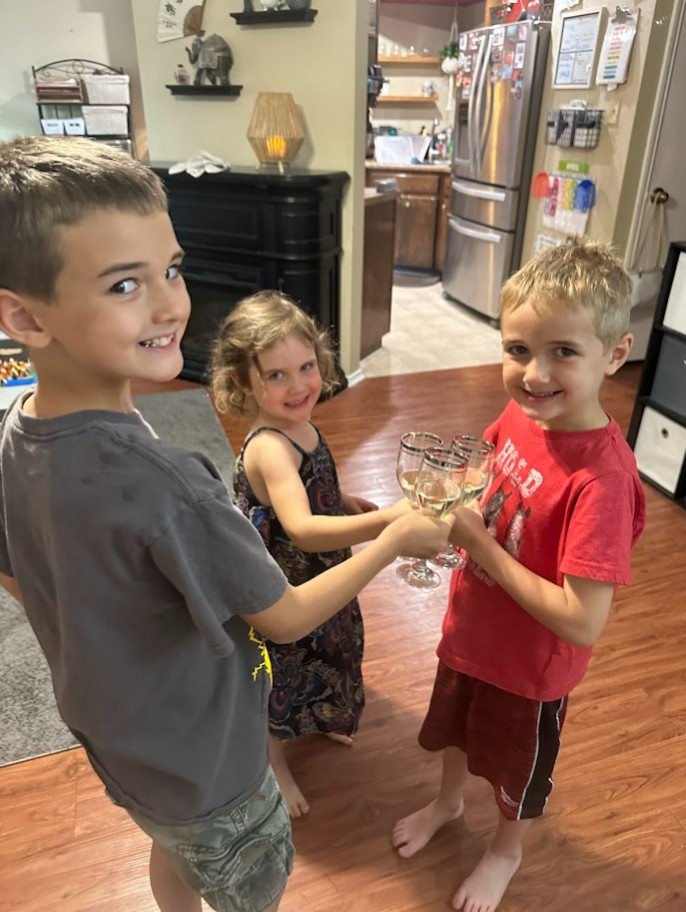
Step 15: Nirtza– “we did it!” Here we sing songs of deliverance and look forward to the future when we will share in the Passover with Christ himself. (We see that we will still keep this feast in the Millennial Kingdom in Ezekiel 45:21-24). This is where we chose to have a little praise party! We ended our Seder with an epic dance party to the song “Egypt” by Cory Asbury. It was a great way to wrap up dinner before foot washing!
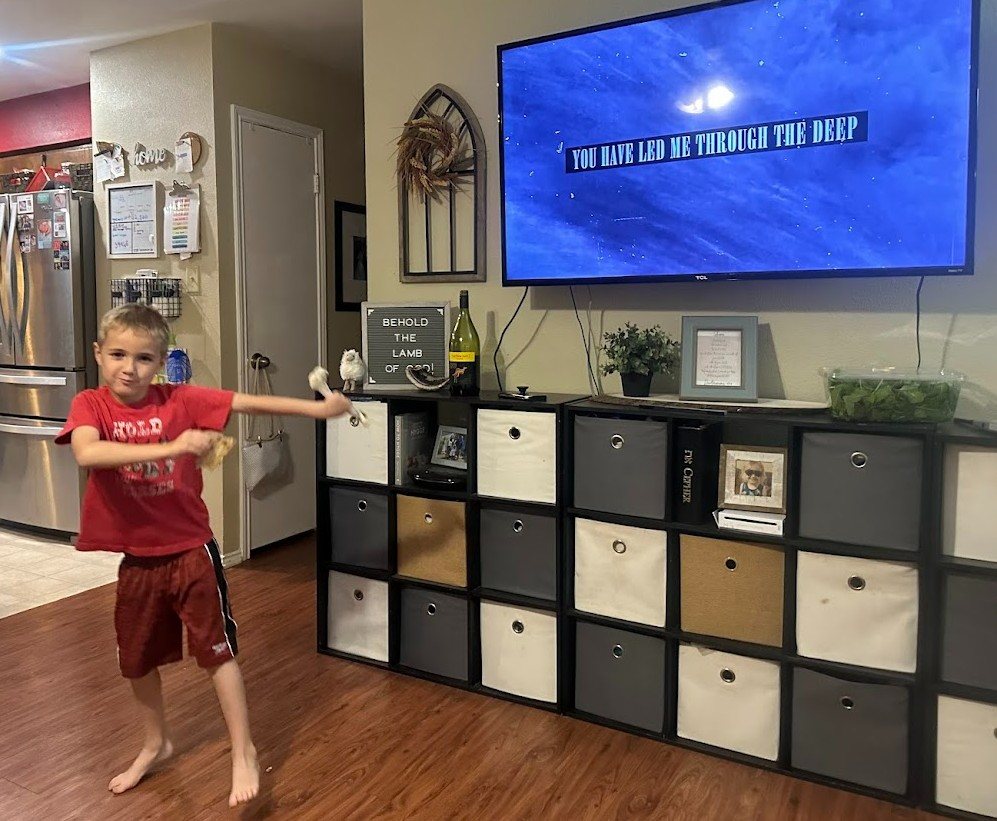

Here are the lyrics to that song:
Just lift a mighty shout in this place
I won’t forget
The wonder of how You brought
Deliverance, the exodus of my heart
‘Cause You found me
You freed me
Held back the waters for my release
Oh, Yahweh (sing this with me)
You’re the God who fights for me
Lord of every victory
Hallelujah, hallelujah
You have torn apart the sea
You have led me through the deep
Hallelujah, hallelujah
A cloud by day
Is a sign that You are with me
The fire by night
Is the guiding light to my feet (You found)
‘Cause You found me
You freed me
Held back the waters for my release
Oh, Yahweh (come on You’re the God who fights)
You’re the God who fights for me
Lord of every victory
Hallelujah, hallelujah
You have torn apart the sea
You have led me through the deep
Hallelujah, hallelujah (You’re the God who fights)
You’re the God who fights for me
Lord of every victory
Hallelujah, hallelujah
You have torn apart the sea
You have led me through the deep
Hallelujah, hallelujah, oh-oh
(Sing this with me, You stepped in, yeah)
‘Cause You stepped into my Egypt
And You took me by the hand
And You marched me out in freedom
Into the promised land
And now I will not forget You
I’ll sing of all You’ve done
Death is swallowed up forever
By the fury of Your love
‘Cause You stepped into my Egypt
And You took me by the hand
You marched me out in freedom
Into the promised land
Now I will not forget You (God)
I’ll sing of all You’ve done
Death is swallowed up forever
By the fury of Your love (You’re the God who fights)
You’re the God who fights for me
Lord of every victory
Hallelujah, hallelujah
You have torn apart the sea
You have led me through the deep
Hallelujah, hallelujah (just the voices now)
You’re the God who fights for me
Lord of every victory
Hallelujah (come on sing it out), hallelujah (You’ve torn apart)
And You have torn apart the sea
You have led me through the deep
Hallelujah, hallelujah
Come on there’s freedom in this house today
There’s joy in this place, yeah
‘Cause You stepped into my Egypt
You took me by the hand
And You marched me out in freedom
Straight into the promised land
Now I will not forget You
I’ll sing of all You’ve done
Death is swallowed up forever
By the fury of Your love
(Lift up your voice and prophesy)
After our dinner, we had a special time to wash each other’s feet. We talked about what it looks like to serve one another in love and to follow the example that Jesus set for us. My youngest was SO excited to wash our feet- it was really the sweetest thing!
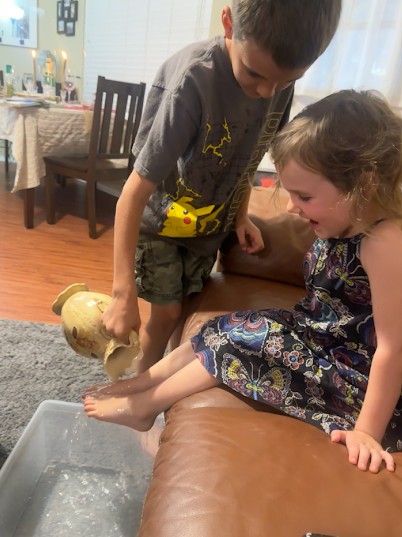


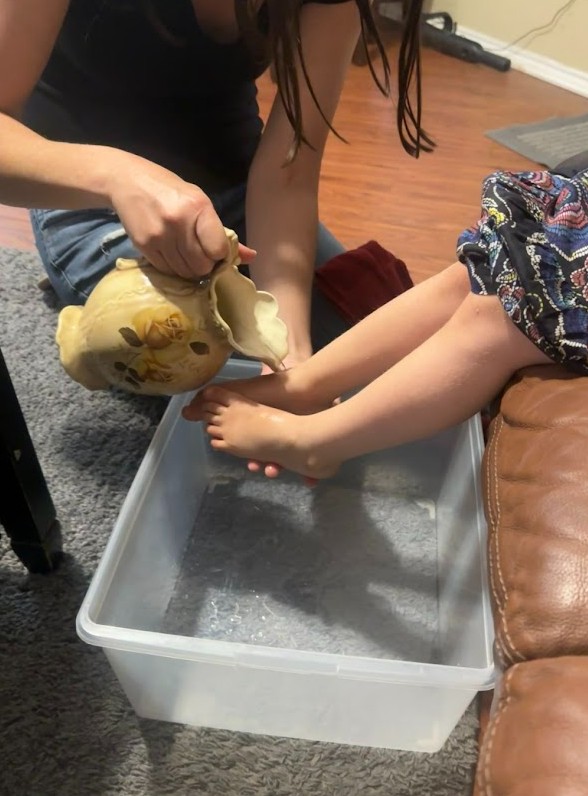
May we continue to remember the deliverance that God has given us in Yeshua, our Messiah!




 Logsdon's big adventures!
Leave a comment